
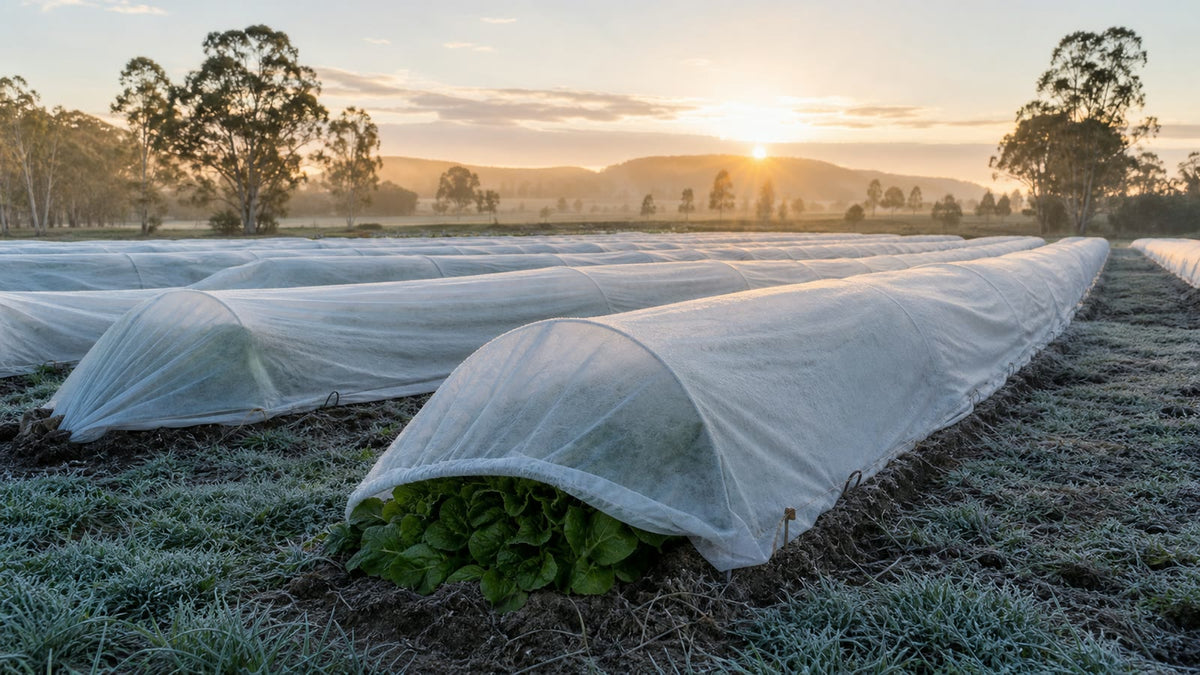
Frost cloth is a lightweight physical cover placed over or above plants during cold-weather risk periods. It can reduce direct exposure and create a different microclimate around the crop, but it cannot guarantee a fixed temperature increase or prevent every type of frost damage.
Frost events vary with topography, wind, humidity, cloud, soil heat and crop stage. Agriculture Victoria advises growers affected by frost to inspect crops, consult an agronomist or industry group and develop a response based on the actual damage and production system.
What 30 GSM frost cloth is designed to do
FARM GUARD FC-030 is a 30 GSM agricultural plant-cover fabric offered in White and Green standard variants. It is intended for gardens, nurseries and horticultural crops that need a light seasonal cover. The fabric is not a structural safety net, waterproof membrane or substitute for a complete frost-management plan.
View 30 GSM frost protection cloth.
Installation principles
- Check the forecast and site: identify low areas where cold air may settle and plan access before conditions deteriorate.
- Choose direct drape or support: some crops can be lightly draped, while delicate plants may need hoops or a frame to reduce contact.
- Cover the full area: leave enough material to reach the ground around the perimeter without stretching the fabric excessively.
- Secure every edge: use suitable weights, pins or battens for the soil and wind exposure. Avoid sharp fixings that cut the fabric.
- Monitor the crop: check temperature, moisture and ventilation under local conditions. Remove or vent the cover when it is no longer needed.
Temperature claims need local evidence
A single protection temperature should not be applied to every installation. Results depend on the crop, fabric contact, soil heat, wind, duration of the event and how well the perimeter is sealed. If a project depends on a specific minimum temperature, use site sensors, a trial area and advice from a local agronomist.
Physical covering is one of several possible frost-management measures. Site selection, cold-air drainage, soil and groundcover management, irrigation systems and other active measures can also form part of a farm strategy. The appropriate combination is site-specific.
Removing, drying and reusing the fabric
- Remove the cloth carefully instead of pulling it across stems, wire or sharp edges.
- Allow wet material to dry before long-term storage.
- Shake or brush off soil and plant debris without damaging the structure.
- Fold or roll the fabric consistently and label the size for the next deployment.
- Inspect seams, tears and contaminated sections before reuse.
Reuse depends on the condition of the actual fabric after handling and exposure. FARM GUARD does not publish a universal service-life promise for FC-030 because installation, weather and storage conditions differ.
Ordering for a nursery or project
Browse the Frost Protection collection. Standard sizes are available by written quotation; custom dimensions, colours, labels and bulk packing require a confirmed quotation through Wholesale Enquiry.
Where summer solar exposure is the main issue rather than frost, use the separate shade cloth percentage guide.


