
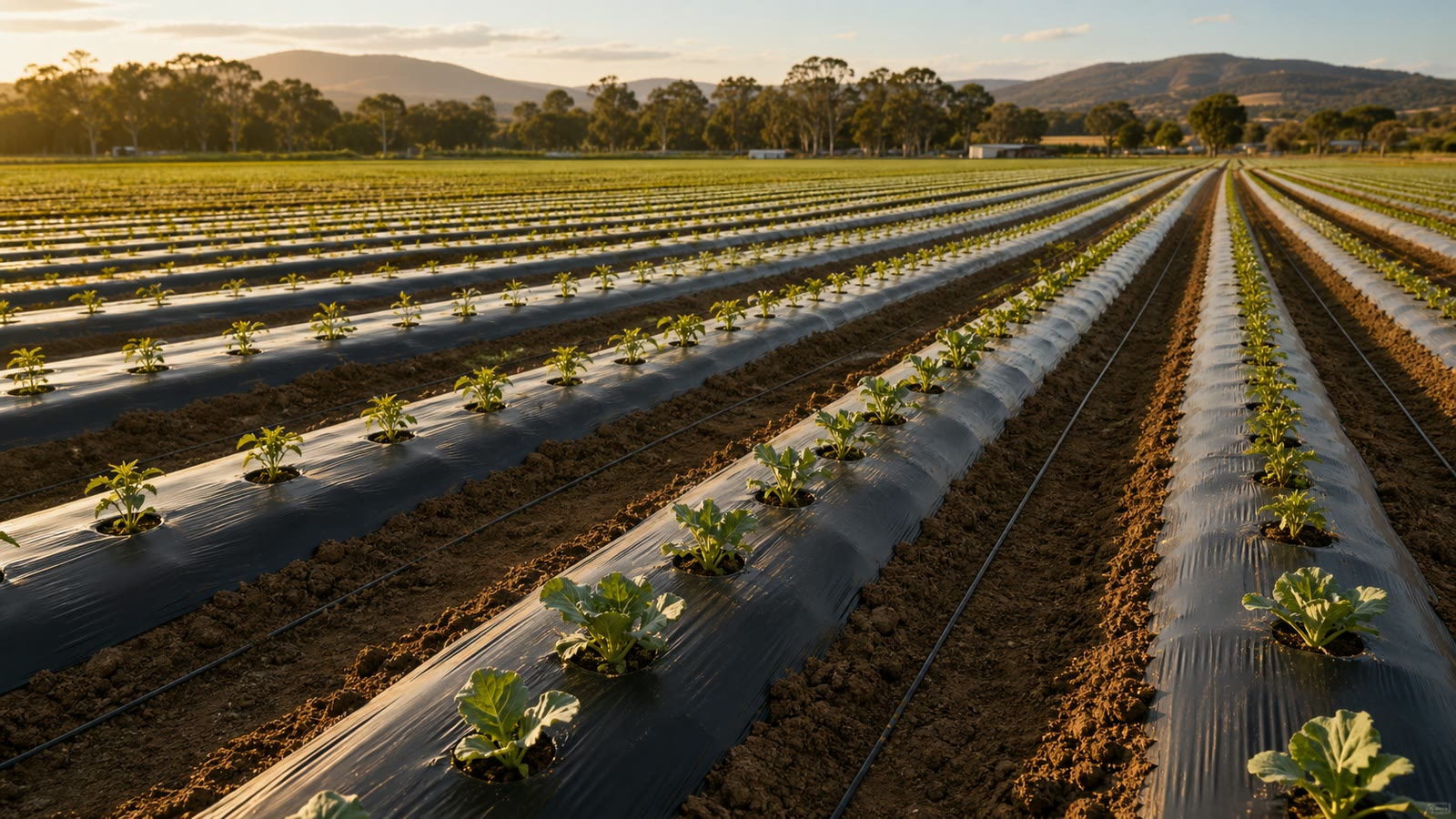
Plastic mulch film is used over prepared beds to modify the soil-surface environment and support weed, moisture and crop-management plans. Thickness matters, but it should be selected together with film width, bed shape, laying equipment, crop duration, soil condition, irrigation design and the removal plan.
GRDC material describes plastic mulching as an established technique in horticulture and notes potential effects on evaporation and soil temperature, while also recognising cost, degradation, removal and disposal concerns. Those trade-offs should be considered before choosing a film.
FARM GUARD standard thickness programme
FARM GUARD MF-001 is black polyethylene agricultural mulch film offered in 10, 14 and 15 micron standard variants. The correct thickness is not determined by crop name alone.
- 10 micron: compare for applications prioritising lower film mass and careful short-cycle handling.
- 14 micron: a mid-range option when buyers want additional handling margin.
- 15 micron: the heaviest standard option in the current programme for projects prioritising film mass and robustness.
These are comparison principles, not lifespan guarantees. Soil, equipment setup, stones, wind, crop residues, installation tension and exposure can change field performance.
View black agricultural mulch film.
Bed and irrigation preparation
- Shape a consistent bed that matches the film width and laying equipment.
- Remove sharp objects and large clods that can puncture unsupported film.
- Confirm drip-line placement and test the irrigation system before covering it.
- Lay film with controlled tension; excessive stretching reduces the handling margin.
- Anchor edges continuously for the soil type and expected wind.
Planting and field checks
Planting holes should be matched to the crop and equipment, with cuts kept as controlled as practical. Inspect edges, joins and punctures after wind or machinery activity. Where film is used with irrigation, check that water reaches the intended root zone rather than assuming the covered bed is functioning correctly.
Removal and disposal are part of the specification
Conventional PE mulch film needs an end-of-use plan. Before purchase, buyers should consider labour, lifting equipment, soil contamination, local recycling availability and lawful disposal. Do not describe a conventional black PE film as biodegradable unless the exact supplied product and supporting documentation confirm that specification.
Information for a commercial quotation
- Film thickness and colour
- Required width and roll length
- Total area or roll quantity
- Bed dimensions and laying method
- Core, labels, carton or pallet requirements
- Australian delivery postcode, warehouse or port
Browse Agricultural Mulch Films or use Wholesale Enquiry for custom rolls and project freight.
For a comparison of permeable woven weed barriers used in nurseries and landscape projects, read 100 GSM vs 130 GSM Weed Mat.


