
Agricultural buyers often use the terms shade net and shade cloth interchangeably. For commercial growing, however, the material structure, shade percentage and intended application should be checked before selecting a cover. This guide explains the practical differences for farms, greenhouses, nurseries and agricultural distributors sourcing in bulk.
What Is Agricultural Shade Net?
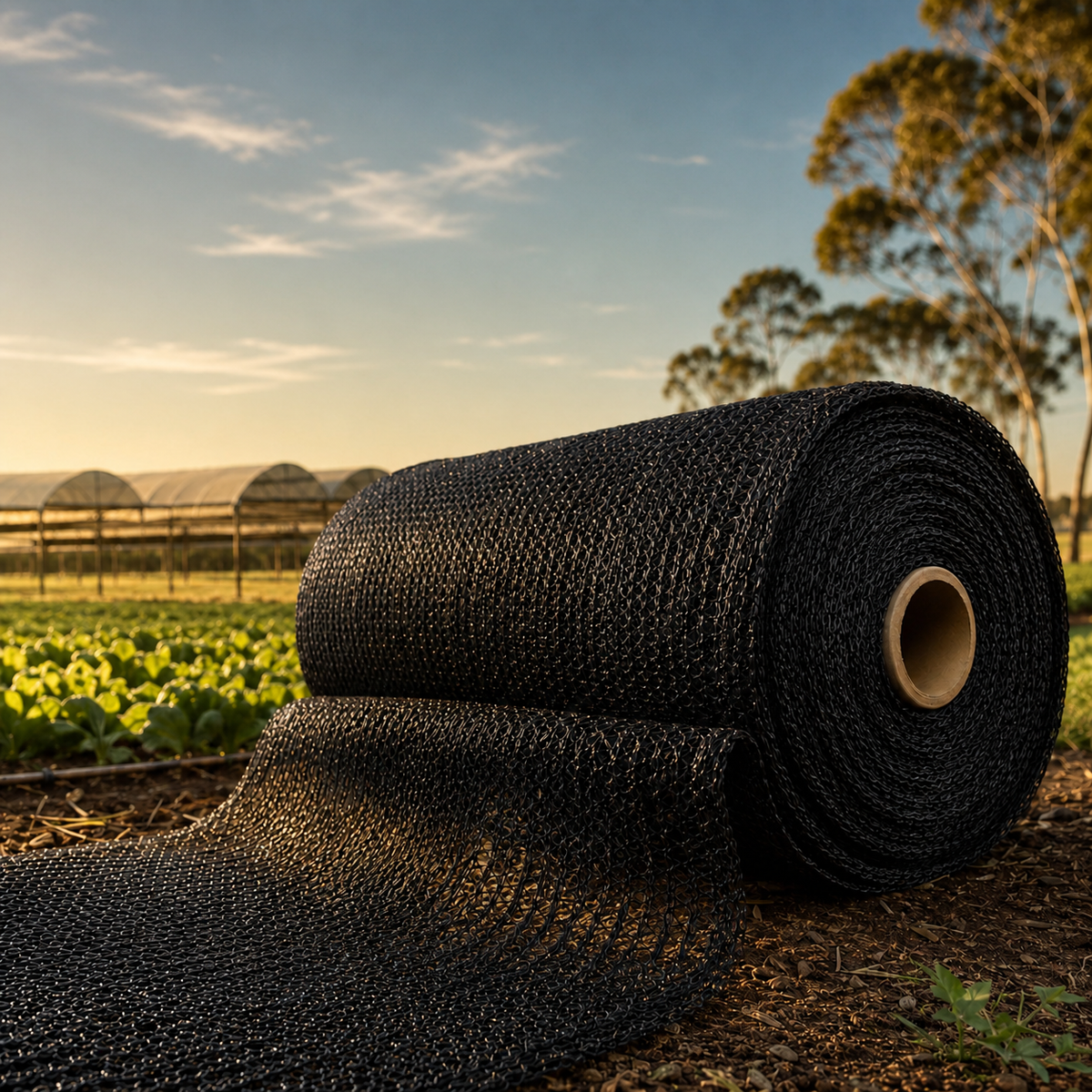
Agricultural shade net is commonly made from UV-stabilised HDPE and produced with a knitted structure. The open knit helps air move through the cover while reducing direct sunlight. Buyers usually specify the required shade percentage, colour, roll width and roll length according to the growing environment.
Typical agricultural applications include greenhouse shading, orchard protection, nursery areas and livestock shelters. The right choice depends on the crop, local climate, installation method and the amount of light reduction required.
Shade Net vs Shade Cloth: Key Differences
In agricultural supply, “shade cloth” is often a broad description for a fabric used to reduce sunlight. A knitted HDPE shade net is a specific construction that is generally selected for commercial agricultural coverage because it combines light reduction with airflow.
- Material: agricultural shade net is commonly specified as HDPE; buyers should confirm the actual material for any product offered as shade cloth.
- Structure: knitted nets have an open construction; a cloth may have a different weave, density or intended use.
- Airflow: open knitted construction can support ventilation in greenhouse, nursery and orchard applications.
- Commercial suitability: bulk buyers should compare the stated shade percentage, GSM, roll dimensions, colour and packaging rather than relying on a general product name.
How to Choose the Right Shade Percentage
Shade percentage should be selected around the crop, climate and growing environment. It is not a universal performance guarantee. As a starting point, buyers often compare three common options:
- 50% shade net (SC-050) for applications that need moderate light reduction while retaining an open growing environment.
- 70% heavy-duty shade net (SC-070) where a higher shade level is required for nursery, greenhouse or livestock-cover applications.
- 90% high-density shade net (SC-090) for projects that call for a denser sun or privacy screen.
Before placing a wholesale order, confirm the relevant shade rate with the crop plan and local agronomy requirements. A buyer should also check whether the same shade percentage is needed across every zone of a site.
Common Applications of Agricultural Shade Net
Agricultural shade net can be used across a range of commercial growing and protection projects:
- Greenhouse and tunnel shading
- Nursery growing areas and propagation spaces
- Orchard and crop protection structures
- Livestock shelter and shaded work areas
Installation design, supporting structure and local weather exposure should be considered separately from the net specification. The covering should be selected as part of the complete project requirement.
What Wholesale Buyers Should Consider
For bulk procurement, a useful enquiry includes more than the product name. Specify the required width, length, colour, shade rate, GSM where applicable, quantity, preferred roll packing and delivery destination. If a standard roll does not fit the project layout, ask whether a custom size is available and confirm the applicable MOQ before ordering.
These details help suppliers compare like-for-like specifications and prepare an accurate quotation without assuming unverified project conditions.
FARM GUARD Shade Net Solutions
FARM GUARD supplies agricultural shade net options through the Shade Nets collection. Buyers can review the available SC-050 50%, SC-070 70% and SC-090 90% product pages before comparing a project specification.
For a project or wholesale request, use the Wholesale Enquiry form or the WhatsApp button on the site. Include the application, shade class, GSM, dimensions, quantity, packing and delivery destination so the specification can be confirmed in writing.


